NAV TEAM INSIGHTS
Beyond Temperature Monitoring: The Future of Smart Cold-Chain Management
Modern cold-chain monitoring is about far more than recording temperatures. Discover how real-time equipment monitoring, predictive alerts, and operational intelligence protect products, reduce downtime, and improve compliance.
Beyond Temperature Monitoring: The Future of Smart Cold-Chain Management
For years, cold-chain monitoring has focused on a single question:
"Is the temperature within range?"
While temperature is certainly important, today's operations require far more visibility.
Restaurants, food processors, pharmaceutical manufacturers, grocery stores, seafood distributors, and logistics providers all depend on refrigeration systems that operate continuously. A single equipment failure can result in thousands of dollars in product loss, interrupted operations, and compliance issues.
The future of cold-chain management isn't simply monitoring temperatures—it's understanding the entire health of the refrigeration system.
Temperature Is Only One Piece of the Puzzle
Imagine receiving an alarm that a walk-in freezer has reached 18°F.
By the time the alert arrives, the problem has already occurred.
Instead, what if your monitoring system recognized that the compressor had stopped twenty minutes earlier?
Or detected that the door had been left open?
Or noticed that recovery time after each door opening was becoming progressively longer over the past week?
These early warning indicators allow maintenance teams to resolve problems before products are ever at risk.
Building a Complete Equipment Profile
A modern cold-chain monitoring system should continuously monitor much more than temperature.
Important data points include:
Product temperature
Ambient temperature
Door status
Compressor operation
Fan status
Defrost cycles
Electrical current
Power outages
Humidity
Recovery time
Runtime hours
Alarm history
When these measurements are viewed together, they create a complete picture of equipment performance.
Predictive Maintenance Saves Money
Equipment rarely fails without warning.
Compressors begin running longer.
Recovery times increase.
Current draw changes.
Door openings become more frequent.
These subtle changes often occur weeks before a complete failure.
Predictive monitoring helps maintenance teams schedule repairs during planned service windows rather than responding to costly emergency calls.
Protecting Valuable Inventory
Whether storing vaccines, seafood, frozen foods, pharmaceuticals, or laboratory materials, product protection is the primary goal.
Knowing how long products have been exposed to unsafe conditions is often more valuable than simply knowing the current temperature.
Modern monitoring platforms can estimate:
Time until warning limits
Time until critical limits
Estimated product recovery time
Potential product loss
Equipment recovery performance
This information enables managers to make informed decisions quickly during an equipment failure.
Compliance Without the Paperwork
Many industries require detailed environmental records.
Instead of relying on manual temperature logs, automated monitoring provides:
Continuous recording
Secure historical archives
Automated alarm documentation
Maintenance history
Compliance reports
Audit-ready records
These reports can be generated in minutes rather than hours.
Monitoring Multiple Locations
Organizations with multiple facilities often struggle to understand what is happening across all locations.
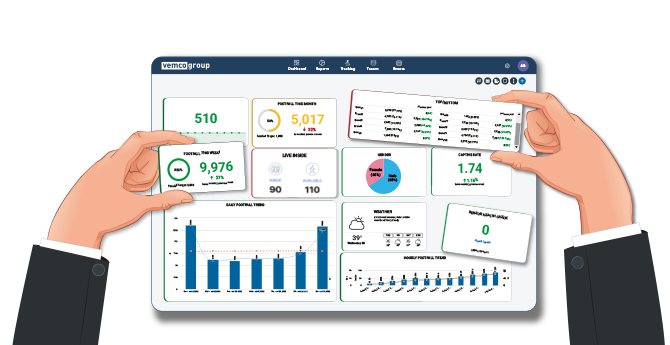
A centralized dashboard allows operators to monitor:
Restaurants
Grocery stores
Distribution centers
Laboratories
Manufacturing plants
Warehouses
From a single interface, managers can immediately identify equipment requiring attention and prioritize service accordingly.
Real-Time Alerts That Matter
Not every event requires immediate action.
Smart monitoring systems reduce alarm fatigue by providing intelligent notifications based on actual operational risk.
Examples include:
Door left open longer than expected
Compressor failure
Power interruption
Slow temperature recovery
Repeated high-temperature events
Sensor failure
Loss of communication
The result is fewer nuisance alarms and faster responses to genuine problems.
Operational Intelligence Beyond Refrigeration
Cold-chain monitoring is most effective when combined with other operational data.
Organizations can correlate refrigeration performance with:
Energy consumption
Water usage
Building occupancy
Environmental conditions
Equipment maintenance
Staff activity
This broader operational intelligence helps organizations improve efficiency while reducing operating costs.
The NAV Team Difference
At NAV Team, we believe monitoring should provide actionable intelligence—not just alarms.
Our Cold-Chain Monitoring platform combines real-time sensor data, equipment health monitoring, predictive analytics, and intuitive dashboards to help organizations protect valuable inventory, improve compliance, and reduce operational risk.
By transforming thousands of sensor readings into meaningful insights, businesses gain the visibility they need to prevent failures before they become costly emergencies.
The future of cold-chain management isn't simply knowing when something goes wrong.
It's knowing how to prevent it in the first place.