NAV TEAM INSIGHTS
Why Real-Time Environmental Monitoring Is Becoming Essential for Modern Facilities
Environmental monitoring has evolved far beyond recording temperature and humidity. Learn how real-time sensors, automated alerts, and operational intelligence help organizations improve compliance, reduce downtime, and protect critical assets.
Why Real-Time Environmental Monitoring Is Becoming Essential for Modern Facilities
Every facility depends on its environment.
Whether it's a pharmaceutical cleanroom, a food processing plant, a manufacturing facility, a healthcare laboratory, or a retail location, environmental conditions directly impact product quality, employee safety, operational efficiency, and regulatory compliance.
Yet many organizations still rely on manual inspections or disconnected monitoring systems that only reveal problems after they have already occurred.
Today's facilities require continuous visibility—not occasional snapshots.
The Cost of Not Knowing
Environmental issues rarely announce themselves.
A refrigeration unit begins losing efficiency.
Humidity slowly rises inside a cleanroom.
Carbon dioxide levels increase during production.
Water leaks develop beneath equipment.
By the time someone notices the problem, the damage may already be done.
Real-time monitoring allows organizations to detect small changes before they become expensive failures.
Every Sensor Tells a Story
Modern facilities generate enormous amounts of operational data.
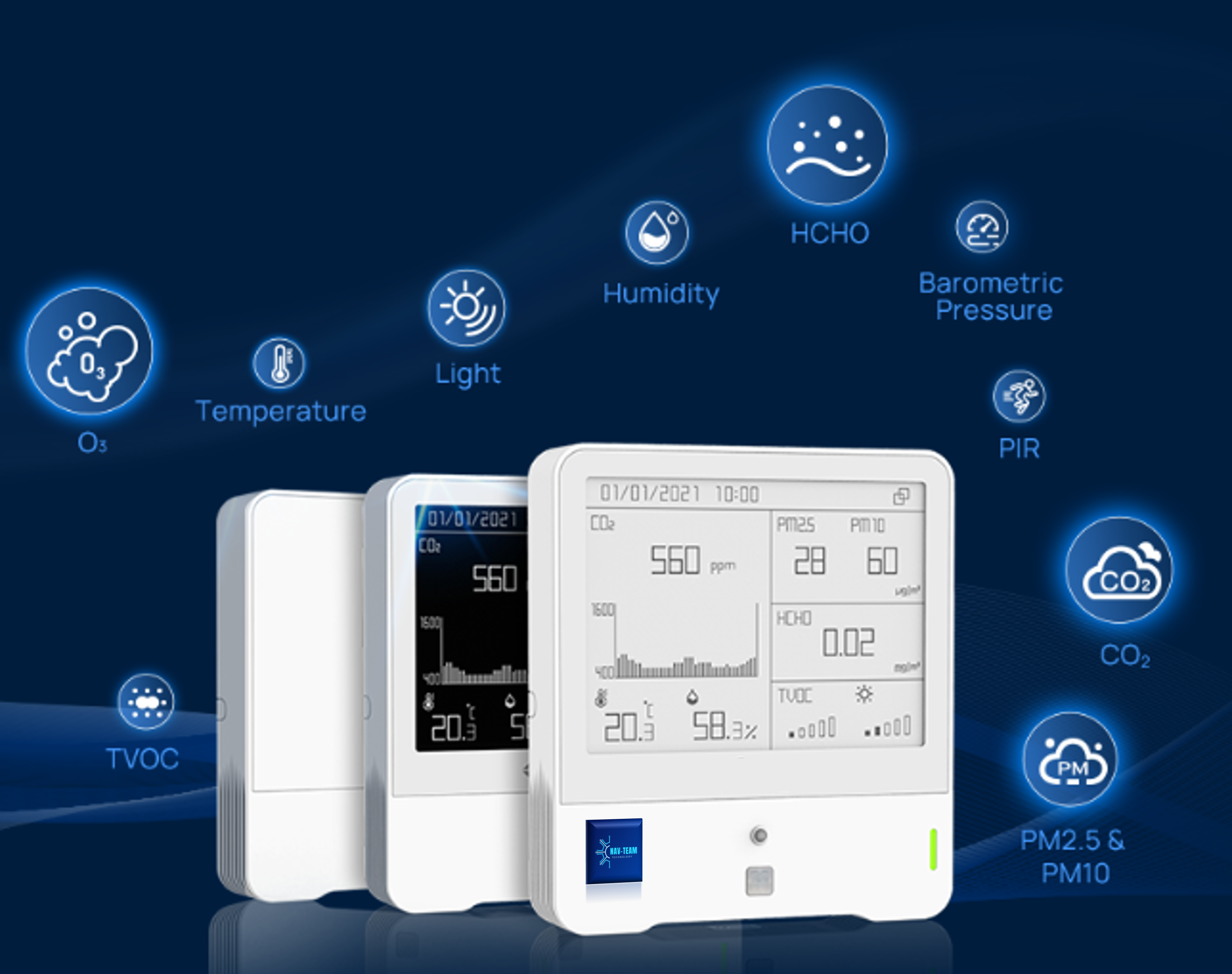
Instead of monitoring only one measurement, organizations should consider a complete environmental picture that includes:
Temperature
Humidity
Air pressure
Differential pressure
Air quality
Carbon dioxide (CO₂)
Volatile organic compounds (VOC)
Water leaks
Door status
Noise levels
Vibration
Power consumption
Equipment status
When these measurements are analyzed together, they provide valuable insight into how an operation is performing.
Compliance Without Constant Manual Checks
Many industries require documented environmental conditions.
Historically, employees walked from room to room recording temperatures and humidity on paper logs.
This process is time-consuming, prone to human error, and provides only a few data points each day.
Automated monitoring systems continuously record environmental conditions around the clock, creating accurate audit trails while reducing labor requirements.
Instead of asking whether conditions were acceptable during a daily inspection, organizations know they remained within specification every minute of every day.
Responding Before Small Problems Become Big Ones
Traditional alarm systems often notify personnel only after conditions exceed acceptable limits.
Modern monitoring platforms can recognize trends that indicate developing problems.
Examples include:
Gradually increasing room temperatures
Slower HVAC recovery times
Frequent pressure fluctuations
Repeated humidity spikes
Declining equipment performance
These early indicators provide maintenance teams with valuable time to investigate and correct issues before operations are affected.
Centralized Visibility Across Every Location
Organizations operating multiple facilities often struggle to understand what's happening at each site.
A centralized monitoring platform allows managers to view every location from a single dashboard.
Whether overseeing one facility or hundreds, operators can quickly identify alarms, compare locations, and prioritize maintenance activities.
This level of visibility helps standardize operations while improving response times.
Smarter Alerts Reduce Alarm Fatigue
Too many alerts can be just as problematic as too few.
Intelligent monitoring systems prioritize notifications based on operational impact.
Examples include:
HVAC equipment failure
Pressure deviations in cleanrooms
Excessive freezer door openings
Water leak detection
Power interruptions
Air quality concerns
Sensor communication failures
By focusing attention on meaningful events, organizations can respond more efficiently while avoiding unnecessary interruptions.
Better Data Leads to Better Decisions
Environmental monitoring isn't only about responding to alarms.
Historical trends help organizations answer important questions:
Why are energy costs increasing?
Which equipment requires the most maintenance?
Which rooms experience frequent environmental changes?
How effective were recent HVAC upgrades?
Are operational improvements producing measurable results?
These insights support long-term planning and continuous improvement.
Integrating Environmental Intelligence
The greatest value comes from combining environmental monitoring with other operational data.
When environmental information is integrated with occupancy analytics, equipment monitoring, access control, and energy management, organizations gain a complete picture of facility performance.
This connected approach allows managers to make faster, more informed decisions that improve both efficiency and reliability.
Building Smarter Facilities with NAV Team
At NAV Team, we believe environmental monitoring should do more than trigger alarms.
Our platform brings together sensors, real-time analytics, historical reporting, and intelligent dashboards into a single operational intelligence solution.
From cleanrooms and manufacturing facilities to retail stores and cold-chain environments, NAV Team helps organizations monitor critical conditions, reduce risk, improve compliance, and make better decisions every day.
Because when you can see what's happening in real time, you can solve problems before they become costly disruptions.